






What a Modern Applicant Tracking System Should Look Like in 2026?
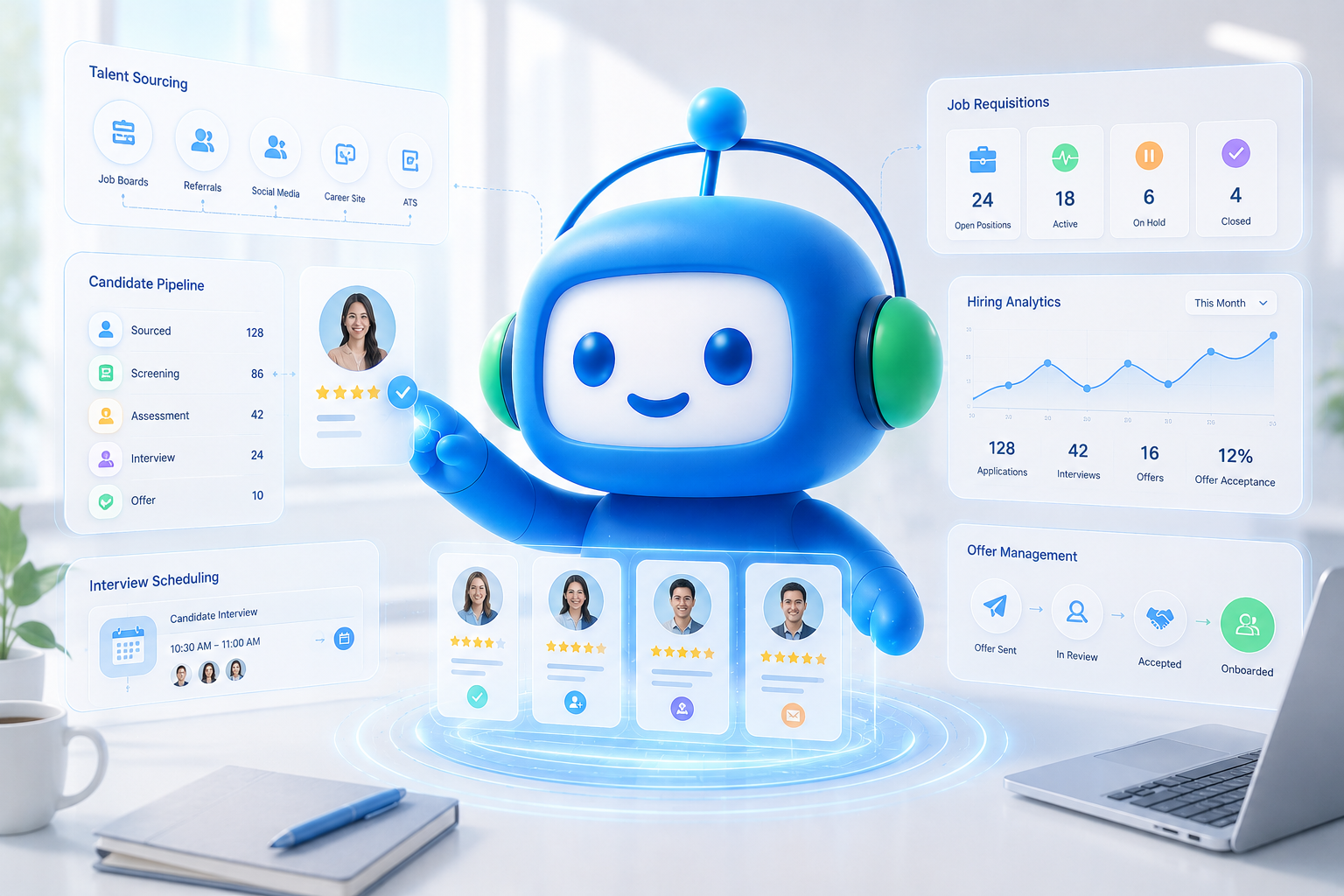
Recruitment has changed dramatically over the last decade. Yet many organizations still rely on systems designed for a very different era of hiring. In 2026, a modern Applicant Tracking System is no longer just a resume database or workflow manager. It is the strategic backbone of talent acquisition — driving speed, intelligence, compliance, and collaboration across the entire hiring lifecycle. As competition for talent intensifies and hiring becomes increasingly data-driven, the expectations from ATS Software and Hiring Software have fundamentally shifted. Organizations now need systems that do more than track applicants — they need platforms that actively improve hiring outcomes.

Recruitment has changed dramatically over the last decade. Yet many organizations still rely on systems designed for a very different era of hiring.
In 2026, a modern Applicant Tracking System is no longer just a resume database or workflow manager. It is the strategic backbone of talent acquisition — driving speed, intelligence, compliance, and collaboration across the entire hiring lifecycle.
As competition for talent intensifies and hiring becomes increasingly data-driven, the expectations from ATS Software and Hiring Software have fundamentally shifted. Organizations now need systems that do more than track applicants — they need platforms that actively improve hiring outcomes.
So, what should a modern Applicant Tracking System look like in 2026?
Let’s break it down.
1. End-to-End Hiring, Not Just Resume Tracking
A true modern Applicant Tracking System must support the entire hiring lifecycle:
- Requisition creation and approvals
- Job posting and sourcing
- Candidate engagement and screening
- Interview coordination
- Offer management
- Onboarding workflows
Legacy ATS Software often focuses heavily on application tracking while relying on multiple external tools for engagement, screening, or onboarding. This fragmented approach leads to inefficiencies, poor candidate experience, and inconsistent data.
In contrast, a modern ATS functions as a unified hiring ecosystem — connecting every stage seamlessly within one intelligent platform.
2. Built-In AI That Enhances — Not Replaces — Recruiters
Artificial Intelligence is no longer optional in Hiring Software.
However, the role of AI in 2026 is not simply about automation. It is about augmentation.
A modern Applicant Tracking System should:
- Intelligently shortlist candidates based on contextual relevance
- Automate repetitive screening workflows
- Enable personalized candidate engagement at scale
- Provide predictive insights to improve quality of hire
- Continuously learn from recruiter interactions
The goal is not to remove the recruiter from the equation — but to empower them with intelligence that increases productivity and improves hiring precision.
ATS Software that lacks AI capabilities will increasingly struggle to keep pace with the complexity and volume of enterprise hiring.
3. Enterprise-Grade Security and Compliance
With growing global data privacy regulations, compliance is a critical requirement — not a differentiator.
A modern Applicant Tracking System must ensure:
- Robust data encryption
- Role-based access controls
- Audit trails for hiring decisions
- Compliance with frameworks such as SOC 2 Type II
- Adherence to global data protection standards (e.g., GDPR and DPDP regulations)
Hiring Software manages highly sensitive candidate information. Any compromise in security can damage employer brand and expose organizations to legal risks.
In 2026, security is foundational to credibility.
4. Configurability Without Complexity
No two organizations hire the same way.
Modern ATS Software should offer deep configurability while remaining intuitive. Enterprises require:
- Custom workflows
- Multi-level approval hierarchies
- Department-specific hiring processes
- Role-based dashboards
- Automated triggers and alerts
At the same time, the platform must remain user-friendly. Complex systems that require extensive technical intervention often face low adoption rates among recruiters and hiring managers.
The best Applicant Tracking Systems strike a balance between flexibility and usability.
5. Real-Time Collaboration Across Stakeholders
Hiring is no longer confined to HR alone. It is a collaborative process involving:
- Recruiters
- Hiring managers
- Interview panels
- Leadership teams
Modern Hiring Software must enable:
- Shared candidate evaluations
- Structured feedback systems
- Centralized communication
- Real-time status updates
Collaboration reduces delays, improves decision quality, and enhances accountability.
An ATS that functions in silos creates friction. An ATS that enables collaboration accelerates hiring momentum.
6. Data-Driven Decision Making
In 2026, intuition alone is not enough.
A modern Applicant Tracking System should provide actionable analytics such as:
- Time-to-hire
- Source effectiveness
- Interview-to-offer ratios
- Offer acceptance rates
- Diversity and inclusion metrics
- Recruiter performance insights
Advanced ATS Software goes a step further — offering predictive insights that help organizations anticipate bottlenecks before they occur.
Data transforms hiring from reactive to strategic.
7. Mobile-First Functionality
Work is no longer tied to desks — and neither is hiring.
Modern Hiring Software must offer full mobile functionality, enabling recruiters and hiring managers to:
- Review candidates
- Provide feedback
- Approve requisitions
- Track hiring pipelines
A mobile-first Applicant Tracking System ensures hiring decisions are not delayed due to accessibility constraints.
8. Scalability for Growing Enterprises
As organizations expand across regions and geographies, their hiring needs evolve.
A modern ATS Software must support:
- Multi-location hiring
- Multi-language capabilities
- Global compliance requirements
- High-volume recruitment
- Role-based regional workflows
Scalability ensures that the platform grows alongside the organization — without requiring disruptive migrations in the future.
The Bigger Shift: From Administrative Tool to Strategic Asset
The most important transformation in 2026 is conceptual.
An Applicant Tracking System is no longer a back-office administrative tool. It is a strategic enabler that directly impacts:
- Quality of hire
- Employer brand
- Recruitment efficiency
- Workforce planning
- Business growth
Organizations that treat their ATS as a strategic investment — rather than a basic Hiring Software solution — will gain a competitive advantage in attracting and retaining top talent.
Final Thoughts
The hiring landscape is more competitive, regulated, and technology-driven than ever before.
A modern Applicant Tracking System must:
- Integrate AI intelligence
- Cover the full hiring lifecycle
- Enable seamless collaboration
- Ensure enterprise-grade security
- Deliver actionable analytics
- Scale globally
In 2026, ATS Software is not just about managing applicants — it is about enabling smarter, faster, and more strategic hiring decisions.
Organizations that embrace this evolution will not only improve operational efficiency — they will redefine how talent acquisition drives business success.
Bringing Modern ATS Capabilities to Life
While many platforms claim to be advanced, very few truly embody what a modern Applicant Tracking System should deliver in 2026.
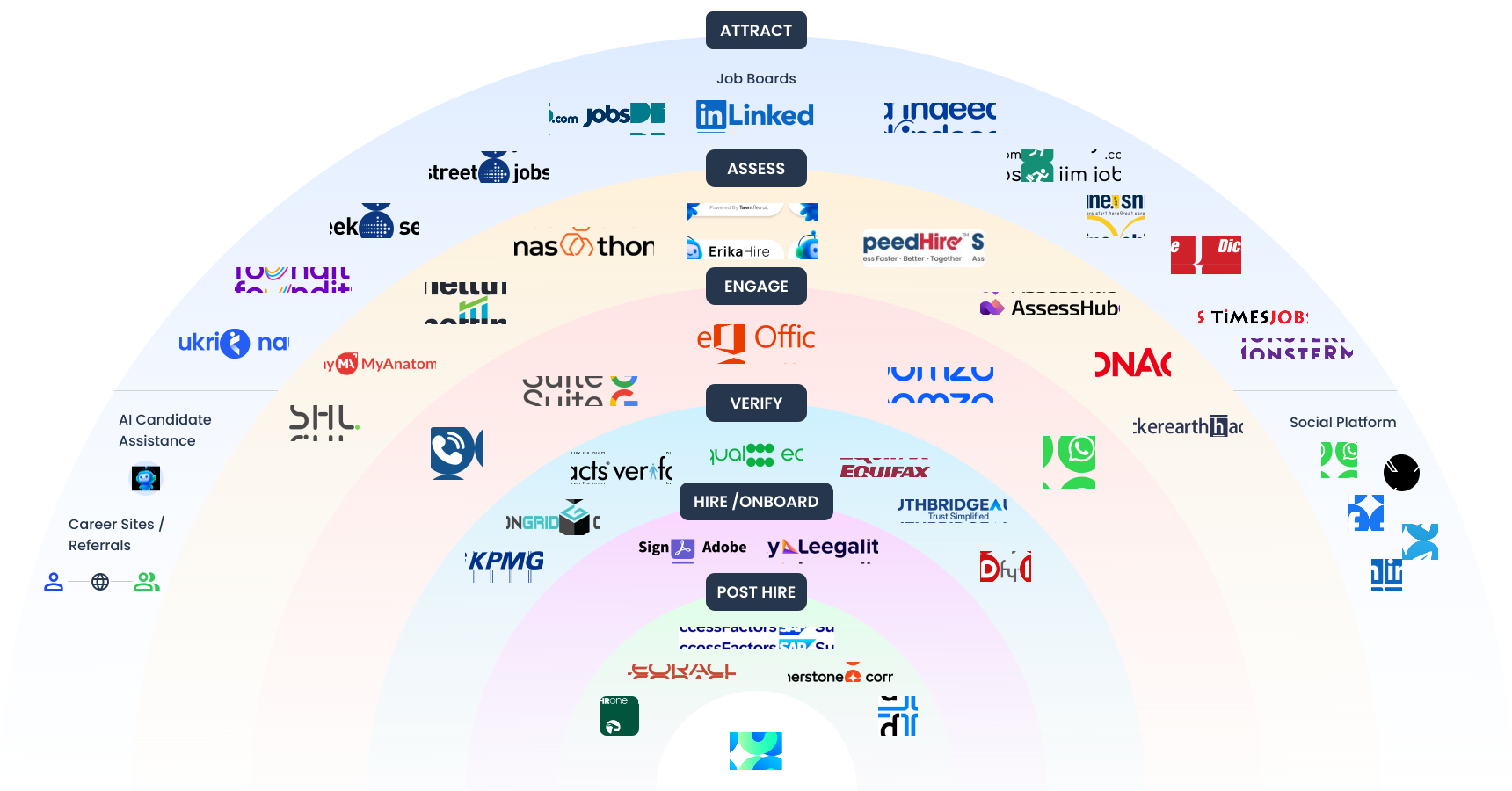
TalentRecruit is designed precisely around these evolving expectations. As an AI-powered ATS Software, it brings together end-to-end hiring workflows — from requisition creation to onboarding — within a single, secure, and scalable ecosystem.
At its core is ERIKA, an Agentic AI Recruiter that enhances sourcing, engagement, and candidate qualification — enabling recruitment teams to move beyond manual screening and reactive hiring. By combining Generative AI with intelligent automation, TalentRecruit transforms traditional Hiring Software into a proactive, insight-driven platform.
Built with enterprise-grade security standards including SOC 2 Type II certification and global data compliance, TalentRecruit ensures that innovation never comes at the cost of governance. Its deep configurability, multilingual capabilities, real-time collaboration tools, and full-featured mobile functionality empower organizations to manage hiring seamlessly across geographies.
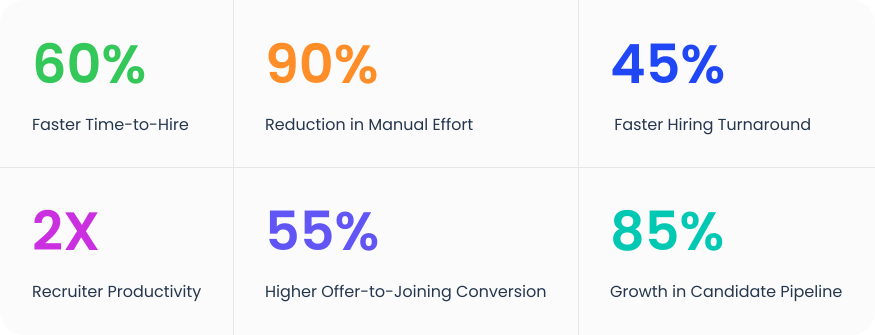
In a landscape where talent acquisition is directly tied to business performance, TalentRecruit exemplifies what a truly modern Applicant Tracking System should be — intelligent, secure, scalable, and designed to elevate both recruiter productivity and hiring outcome

Alok Nidhi Gupta has built this high tech company from scratch as Co-creator of the organization and lead the organization that filed patents in Smart Metering fields. He has been instrumental in the entire design & development of TalentRecruit’s software offerings, it is under his leadership that recruiters across industries have come to rely on TalentRecruit’s robust solutions.