





End-to-End Hiring with a Single ATS: From Requisition to Onboarding

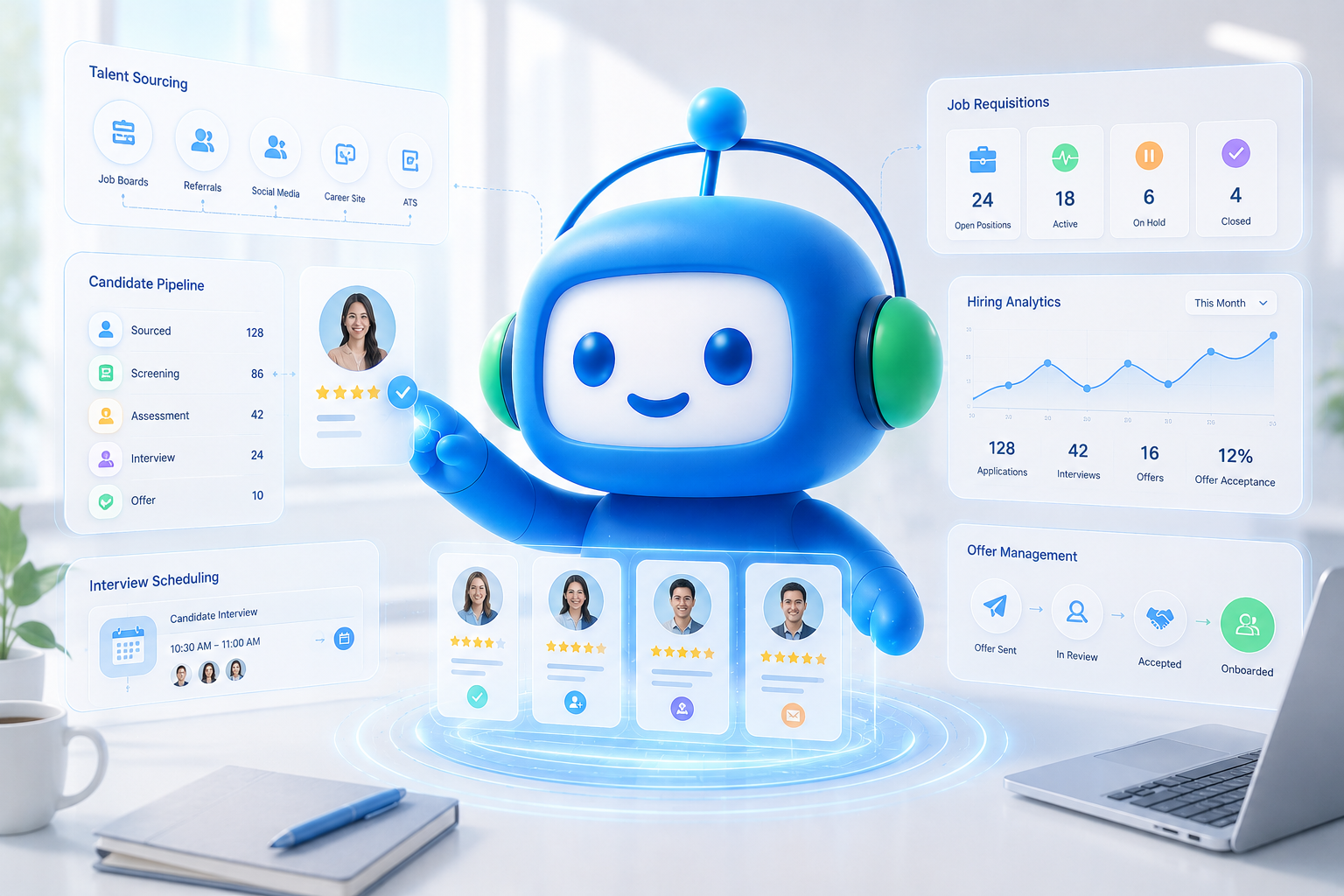
Modern Recruitment Software is transforming this experience by enabling end-to-end hiring within a single platform. By consolidating processes into one intelligent Hiring Software solution, organizations can streamline operations, improve collaboration, and create a more seamless experience for both recruiters and candidates.

Hiring today is no longer a linear process handled by a single recruiter. It involves multiple stakeholders, large volumes of candidates, strict compliance requirements, and increasing expectations for speed and candidate experience.

To manage this complexity, organizations are turning to modern ATS platforms that bring the entire hiring lifecycle into one unified system.

Traditionally, recruitment teams relied on multiple tools to manage different stages of hiring — from requisition approvals and sourcing to interview scheduling and onboarding. While each tool served a specific purpose, the lack of integration often resulted in fragmented workflows, inconsistent data, and slower decision-making.

Modern Recruitment Software is transforming this experience by enabling end-to-end hiring within a single platform. By consolidating processes into one intelligent Hiring Software solution, organizations can streamline operations, improve collaboration, and create a more seamless experience for both recruiters and candidates.

Let’s explore how a modern ATS enables end-to-end hiring — from requisition to onboarding.

The Need for a Unified Hiring Platform

As organizations grow, recruitment operations become increasingly complex. Hiring teams must coordinate with hiring managers, HR leaders, interview panels, and compliance teams — all while managing candidate pipelines and ensuring timely communication.

When these processes are managed across disconnected tools, several challenges emerge:

  • Delayed approvals and miscommunication
  • Inconsistent candidate data across systems
  • Manual data entry and repetitive administrative tasks
  • Limited visibility into recruitment progress
  • Poor candidate experience due to fragmented communication

A centralized ATS eliminates these inefficiencies by acting as the single source of truth for the entire recruitment process.

Instead of managing hiring through scattered systems, recruiters can operate within one unified Recruitment Software platform that connects every stage of the hiring lifecycle.

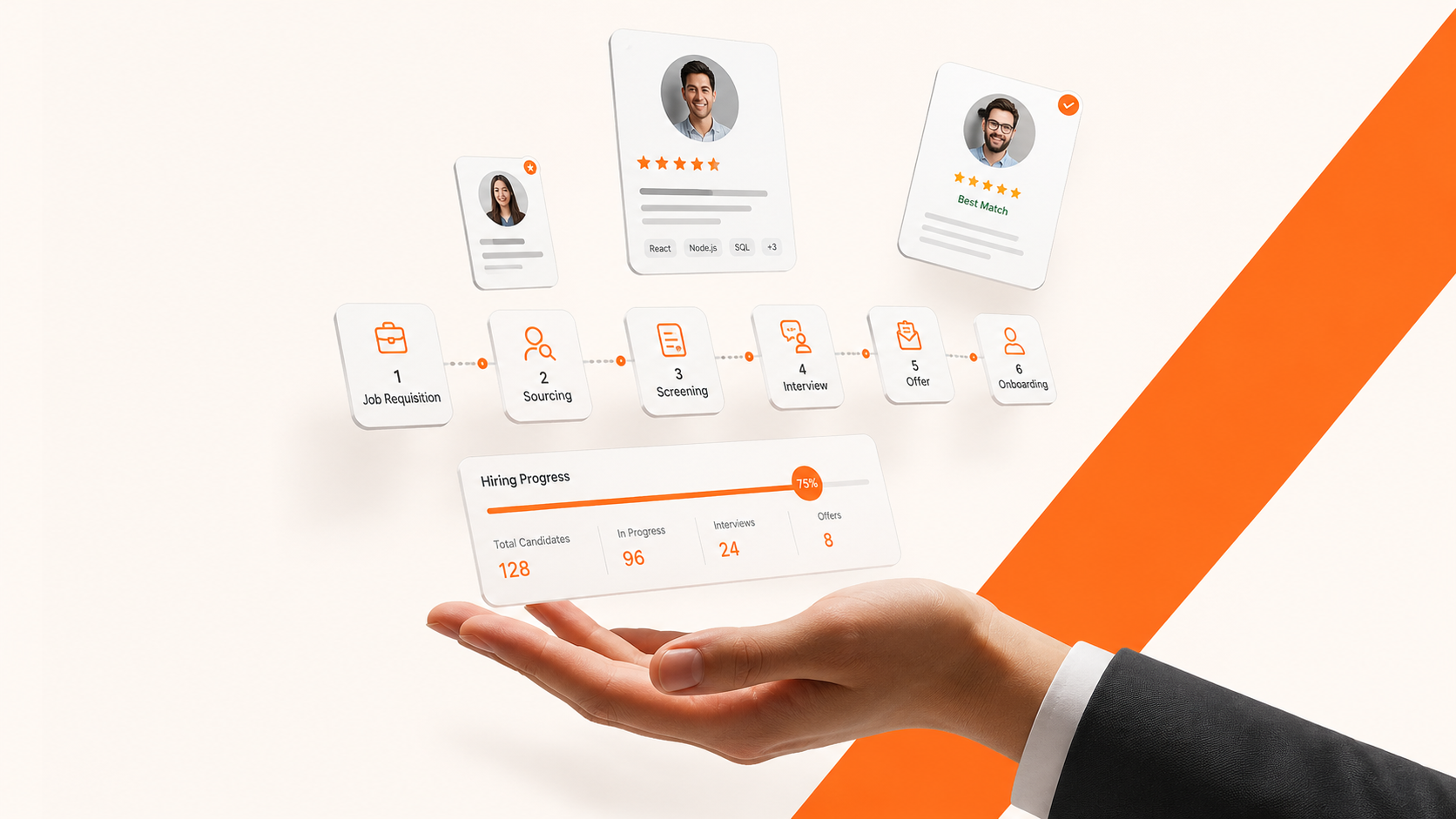
Step 1: Requisition Creation and Approvals

Every hiring journey begins with identifying the need for a new role.

A modern ATS simplifies requisition management by allowing hiring managers and HR teams to create job requisitions within the platform. Automated approval workflows ensure that requisitions move quickly through the necessary review stages.

Key capabilities typically include:

  • Structured requisition templates
  • Multi-level approval workflows
  • Budget and headcount validation
  • Automated notifications for stakeholders

By managing requisitions directly within the Hiring Software, organizations ensure transparency and alignment before the hiring process begins.

Step 2: Job Posting and Candidate Sourcing

Once a requisition is approved, the next step is attracting the right candidates.

Modern Recruitment Software enables recruiters to publish job postings across multiple channels directly from the ATS, including career pages, job boards, and social platforms. This centralized posting approach simplifies job distribution while ensuring consistent messaging across platforms.

Additionally, recruiters can leverage the ATS to:

  • Search internal talent pools
  • Re-engage past candidates
  • Track candidate sources and performance

By consolidating sourcing activities within the ATS, organizations gain clearer visibility into where their best candidates are coming from.

Step 3: Candidate Screening and Shortlisting

One of the most time-intensive stages of hiring is reviewing and shortlisting applications.

A modern ATS helps recruiters manage large volumes of applications efficiently by organizing candidate profiles, resumes, and evaluation criteria in one centralized system. Automated workflows can assist with candidate screening, enabling recruiters to quickly identify profiles that match the job requirements.

Structured evaluation frameworks within the Hiring Software also help reduce bias and ensure consistent candidate assessments across hiring teams.

By simplifying the screening process, recruiters can move qualified candidates forward more quickly while maintaining fairness and transparency.

Step 4: Interview Coordination and Collaboration

Interview scheduling often becomes a logistical challenge when multiple stakeholders are involved.

An integrated ATS streamlines this stage by enabling recruiters to coordinate interviews directly within the platform. Automated scheduling tools can help align interviewer availability, reducing delays and back-and-forth communication.

Recruitment teams can also collect structured feedback from interviewers within the system, ensuring that all evaluations are captured and easily accessible.

This collaborative approach improves decision-making and accelerates the overall hiring process.

Step 5: Offer Management and Candidate Communication

Once the right candidate has been identified, the next step is extending an offer.

A modern Recruitment Software platform enables recruiters to generate, manage, and track offers directly within the ATS. Offer templates, approval workflows, and digital communication tools help ensure a smooth and professional experience for candidates.

Centralized candidate communication within the Hiring Software also ensures that recruiters can keep candidates informed throughout the hiring journey, strengthening employer branding and improving acceptance rates.

Step 6: Seamless Onboarding

The hiring process does not end when a candidate accepts an offer.

A truly end-to-end ATS extends into onboarding, ensuring that new hires transition smoothly into the organization. Automated onboarding workflows can help manage documentation, task assignments, and communication with new employees.

By integrating onboarding within the ATS, organizations eliminate the need for manual handoffs between recruitment and HR teams. This continuity creates a better experience for both recruiters and new hires while ensuring that all relevant data remains centralized.

The Strategic Value of End-to-End Hiring

Managing the entire hiring lifecycle within a single ATS offers several important advantages:

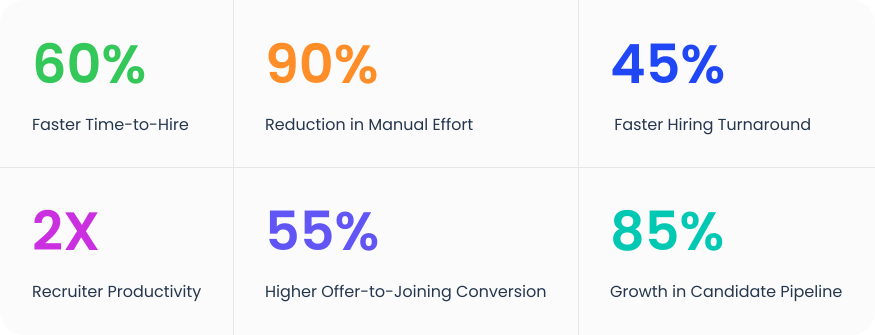
Improved efficiency
Recruiters spend less time switching between tools and more time focusing on candidate relationships.

Better collaboration
Hiring managers, recruiters, and interview panels can work within the same system, improving communication and decision-making.

Data consistency
A unified platform ensures that candidate information remains accurate and accessible across all stages of hiring.

Stronger candidate experience
Streamlined workflows allow organizations to maintain timely communication and reduce hiring delays.

Ultimately, an integrated ATS transforms recruitment from a fragmented operational task into a coordinated, strategic process.

Final Thoughts

As hiring continues to evolve, organizations need systems that can support the entire recruitment lifecycle without complexity or fragmentation.

A modern ATS that integrates sourcing, screening, collaboration, offer management, and onboarding within one platform allows recruitment teams to operate more efficiently while delivering better hiring outcomes.

By consolidating processes within a single Recruitment Software solution, organizations gain the visibility, scalability, and agility needed to compete for top talent in an increasingly dynamic hiring landscape.

Enabling End-to-End Hiring with TalentRecruit

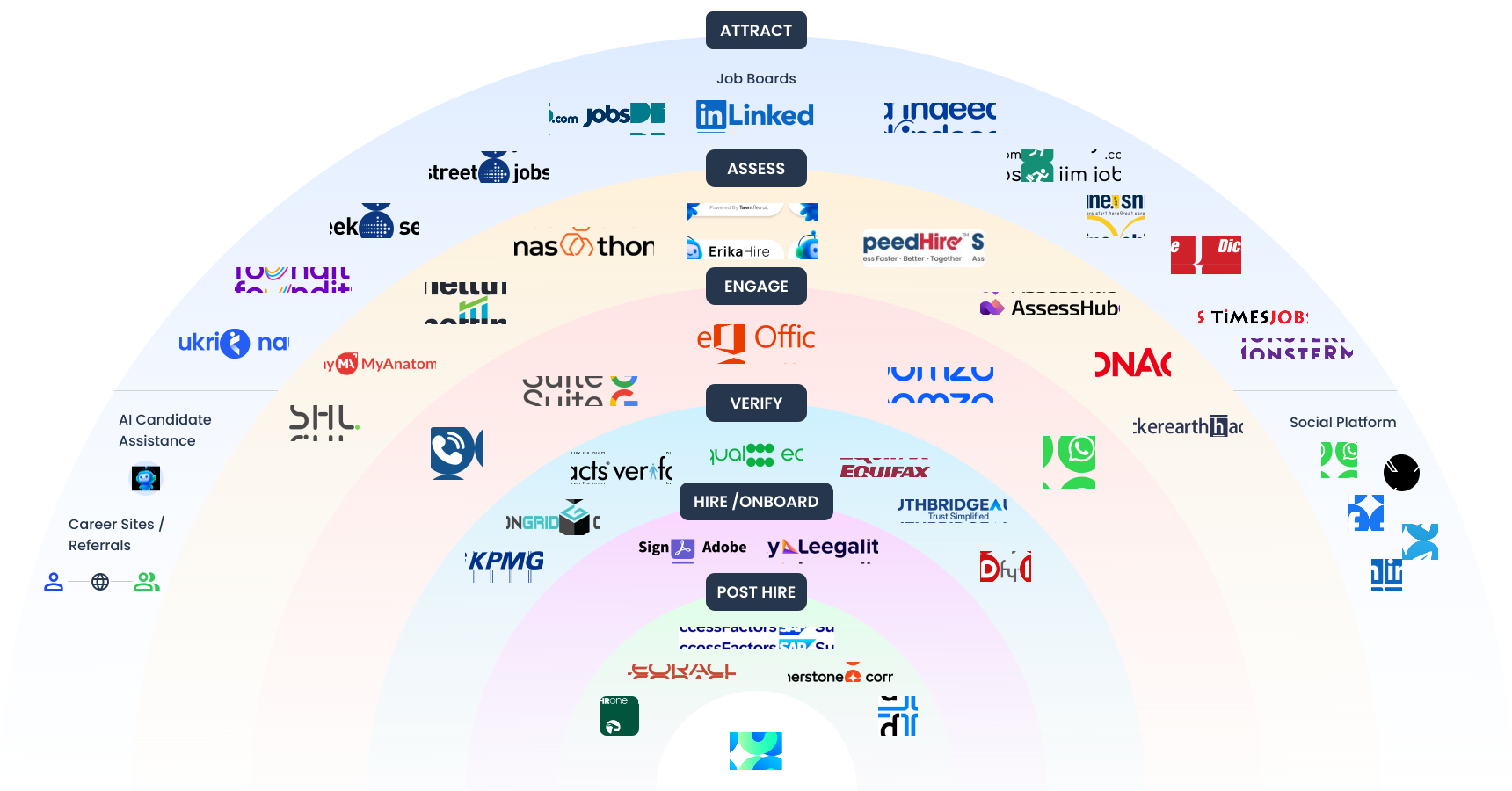
TalentRecruit is designed to support this complete hiring journey through a unified, AI-powered ATS platform. Built as comprehensive Hiring Software, TalentRecruit enables organizations to manage every stage of recruitment — from requisition creation and candidate sourcing to engagement, screening, offer rollout, and onboarding — within one intelligent ecosystem.

With advanced automation capabilities, enterprise-grade security, and deep configurability, TalentRecruit helps recruitment teams streamline operations while maintaining transparency and control across the hiring lifecycle.

By enabling true end-to-end hiring within a single platform, TalentRecruit empowers organizations to transform recruitment into a faster, smarter, and more collaborative process.

Tags:
Culture,
Product Design

Alok Nidhi Gupta has built this high tech company from scratch as Co-creator of the organization and lead the organization that filed patents in Smart Metering fields. He has been instrumental in the entire design & development of TalentRecruit’s software offerings, it is under his leadership that recruiters across industries have come to rely on TalentRecruit’s robust solutions.

Make our ATS a part of your growth Plans

Get A Demo