


Is Your ATS Enough? 7 Signs Your Hiring Platform Has Outgrown It
Every enterprise TA team chose their ATS for good reasons.
It was the right tool for the volume they were managing at the time. It integrated with the systems they had. It gave their recruiters a single place to track candidates. The implementation went reasonably well and the team got comfortable with it.
But recruitment does not stand still. The volume of applications has changed. The complexity of roles has increased. The speed the business expects from hiring has accelerated. And somewhere along the way, the ATS that was solving yesterday’s problem stopped keeping pace with today’s one.
The challenge is that this happens gradually. No single moment announces that the platform has outgrown its usefulness. Instead, it shows up as friction small, persistent, compounding friction that recruiting teams absorb as normal because it has always been there.
Here are seven signs that your ATS is no longer enough and what each one is actually telling you.
Sign 1: Your Recruiters Are Spending More Time in the ATS Than on Candidates
This is the most common sign and the easiest to overlook because it looks like diligence.
Recruiters updating stages manually. Logging candidate feedback from emails into the system. Copying information between tools that do not talk to each other. Moving candidates from one stage to the next because the platform does not do it automatically. Pulling reports at the end of the week because real-time visibility does not exist.
When a recruiter’s day is shaped more by what the ATS needs from them than by what candidates need from the recruiter, the platform is consuming the resource it was supposed to free up. An ATS that requires significant manual effort to operate is not automating recruitment. It is just organizing the manual work in a slightly more structured way.
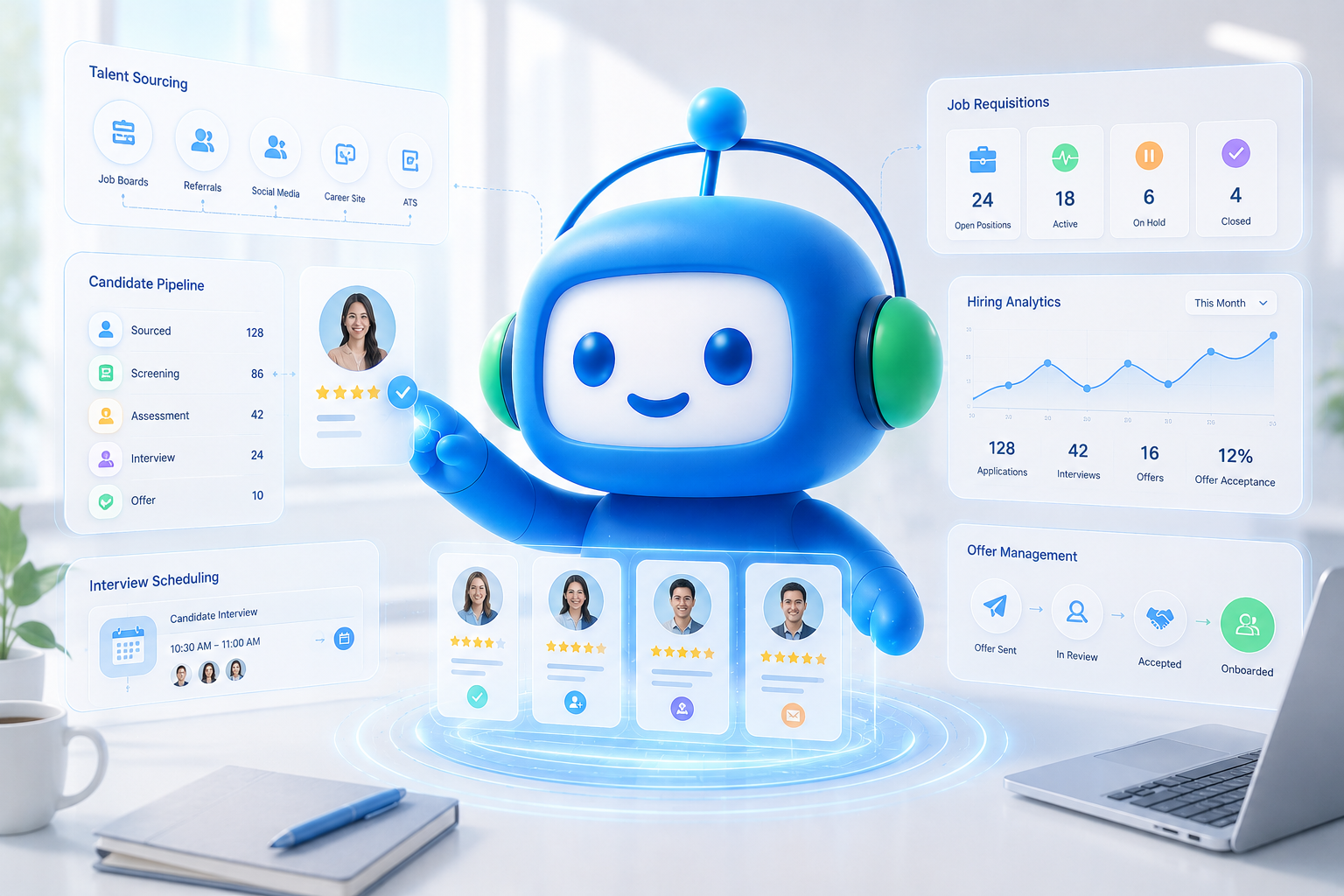
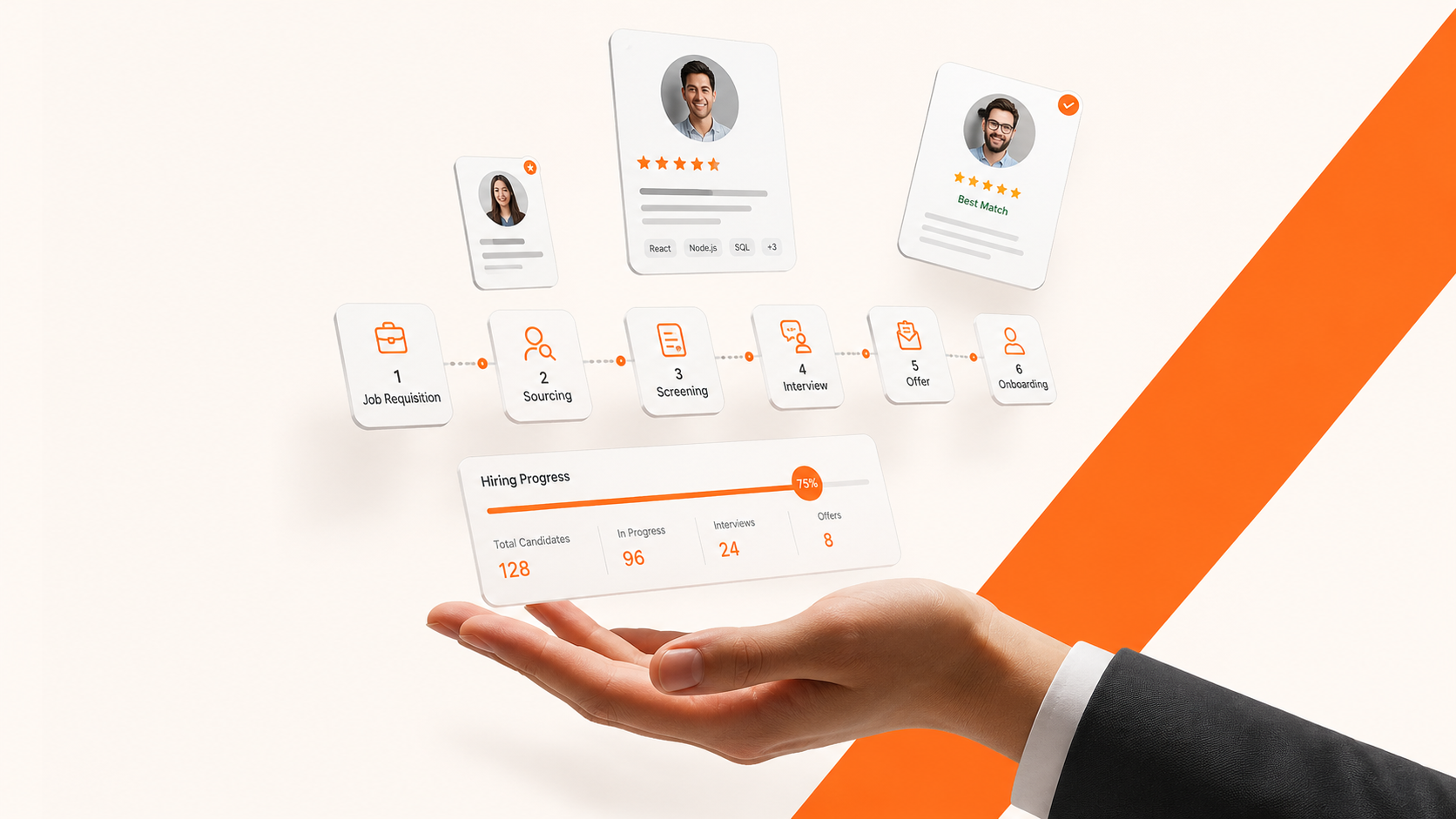
TalentRecruit’s end-to-end hiring suite automates workflow continuity across every stage from requisition to onboarding so candidates move through the process based on defined rules and triggers rather than waiting for a recruiter to manually push them forward.
Sign 2: Your Sourcing Strategy Is Entirely Inbound
If your ATS is waiting for candidates to apply before it does anything, your sourcing strategy has a structural ceiling.
The strongest candidates for most enterprise roles are not actively browsing job portals. They are currently employed, performing well, and only open to the right opportunity if it finds them at the right moment. A platform that only manages the candidates who arrive is not sourcing. It is receiving.
This becomes a visible problem when niche or senior roles sit open for weeks because the inbound pipeline does not contain the right profiles and nobody has the bandwidth to proactively find them.
Erika’s AI sourcing agent continuously identifies matched candidates across internal talent pools and external sources, including passive talent, without a recruiter needing to trigger each search. The pipeline builds itself rather than waiting for applications that may never arrive.
Sign 3: You Are Running Multiple Tools Alongside Your ATS
Count how many tools your recruiting team uses in a typical hiring week.
The ATS itself. A separate sourcing tool. A video interviewing platform. An assessment solution. A scheduling tool. A background verification vendor portal. An offer letter tool. A separate onboarding system. Communication happening across email, WhatsApp, and a messaging platform.
Each of these tools was probably added to solve a specific gap the ATS could not fill. Each one added a new login, a new data silo, and a new manual step to move information between systems. The recruiter became the integration layer, manually carrying data and status updates across tools that were never designed to work together.
This fragmentation has a compounding cost: candidate data is inconsistent across systems, reporting requires manual reconciliation, and the recruiter’s cognitive load increases with every additional tool they have to manage.
TalentRecruit’s platform covers the full hiring lifecycle: manpower budgeting, job requisition management, one-click job posting, sourcing, candidate engagement, assessments and screening, background verification, offer management, and onboarding in one connected system with 50 plus integrations, so information flows through the process rather than being manually moved between tools.
Sign 4: High-Volume Hiring Breaks Your Process Every Time
If your ATS works well for ten open roles but starts showing cracks at fifty, the platform is not built for the scale your business actually requires.
High-volume hiring fresher drives, seasonal surges, rapid expansion exposes every limitation in a manual process. Hundreds of applications arriving simultaneously that need to be screened. Interview scheduling across multiple candidates, locations, and panels that becomes a coordination nightmare. Offer letters that need to go out to dozens of candidates in a compressed timeline.
Most ATS platforms manage this by adding more recruiters to do more manual work. The platform itself does not absorb the volume. The team does.
When autonomous hiring is embedded in the platform AI pre-qualification that screens every application at the same standard regardless of volume, scheduling automation that coordinates panels without manual intervention, offer management that generates and sends letters at scale high-volume hiring stops being a crisis mode event and becomes a manageable, repeatable process.
Sign 5: You Have No Real-Time Visibility Into Your Hiring Pipeline
If understanding where your hiring stands requires someone to pull a report, compile data from multiple systems, and present it in a weekly meeting, your platform is not giving you the intelligence your business needs to make decisions.
Hiring velocity, stage conversion rates, source effectiveness, time-to-fill by department, offer acceptance rates these are not metrics that are useful a week after the fact. A TA leader who finds out on Friday that three critical roles have been stuck at the interview stage for ten days could have intervened on Monday if the visibility existed in real time.
The absence of real-time hiring intelligence is not just a reporting inconvenience. It means decisions about process adjustments, resource allocation, and hiring prioritization are made on outdated information, which means they are frequently made incorrectly.
TalentRecruit’s analytics and dashboards surface hiring performance data in real time, across roles, departments, geographies, and hiring stages, so decisions are based on what is happening now rather than what happened last week.
Sign 6: Your Candidate Experience Is Inconsistent and Hard to Control
Candidate experience in most ATS-driven processes looks like this: an automated confirmation email when they apply, silence for several days, a recruiter reaching out when they get to it, an interview that gets scheduled via email back-and-forth, and a post-interview silence that either ends with an update or doesn’t.
The experience is inconsistent because it depends on recruiter bandwidth at every stage. When bandwidth is high, candidates hear back quickly. When it is stretched, they wait. And the candidates who disengage during the wait are rarely the weakest ones they are the ones who had other options and exercised them.
An ATS that tracks candidate stages but does not actively maintain candidate engagement is solving the wrong problem. Knowing where a candidate is in the process is not the same as ensuring they stay in it.
Erika’s AI candidate engagement agent maintains proactive, personalized, multi-channel communication with every candidate throughout the process, around the clock, without recruiter bandwidth being the constraint. Candidates receive timely updates, intelligent responses to their queries, and a consistent experience regardless of how many other roles the recruiter is managing.
Sign 7: Compliance Is Managed Separately from Your Hiring Process
If your team has a separate spreadsheet, checklist, or manual process for tracking compliance alongside your ATS, the platform is not handling compliance. You are.
This matters more in 2026 than it ever has. India’s DPDP Act places specific obligations on how candidate data is collected, processed, stored, and deleted. Organizations hiring across multiple geographies need to apply different data privacy standards in each location. Audit trails documenting hiring decisions need to be available and accurate when requested.
An ATS that does not have compliance built into its workflows, as an automated, configurable layer rather than a manual process someone manages separately, is a liability risk that grows with every hire made.
TalentRecruit’s platform embeds compliance into the hiring workflow directly. Candidate consent is captured and logged at the point of application. Retention schedules are configurable and enforced automatically. Country and region-specific data privacy policies can be configured within the platform so that compliance requirements are met consistently, without a separate process running alongside the recruitment one.
What These Seven Signs Have in Common
Each of these signs points to the same underlying issue: the ATS was built to organize a manual process, not to replace the manual work within it.
That was an appropriate design for an era when the volume was manageable, the compliance requirements were simpler, the candidate behavior was more predictable, and the business expected hiring to take the time it took.
None of those conditions apply to enterprise hiring in India in 2026.
The shift from an ATS that organizes your hiring to a platform that executes it autonomously, at scale, with compliance embedded and real-time intelligence available is not a technology upgrade decision. It is a capability decision. The question is not whether your current ATS is a good ATS. The question is whether an ATS, however good, is the right category of platform for the hiring challenge your organization actually faces.
For most enterprise TA teams asking that question honestly in 2026, the answer is already clear.