


High-Volume Hiring in Logistics: How AI Agents Handle the Chaos
Logistics doesn’t hire the way most industries do.
There’s no leisurely two-week shortlisting process. No three-round interview pipeline that can afford to stretch across a month. When a warehousing operation is scaling for peak season, when a last-mile delivery network is expanding into three new cities, when a 3PL is onboarding a new client with a contractual staffing commitment the hiring need arrives fast, in large numbers, and with very little tolerance for delay.
A position unfilled in logistics isn’t just an HR metric. It’s a delayed shipment, a missed SLA, an unhappy client, and a very visible operational gap.
This is the environment that exposes every weakness in a traditional hiring process and it’s exactly the environment that AI agents were built for.
Why Logistics Hiring Is a Different Beast
Before understanding the solution, it helps to understand why logistics hiring breaks conventional recruitment tools so quickly.
The volume is relentless. Logistics organisations don’t hire in steady, predictable batches. They hire in surges driven by seasonal demand, contract wins, geographic expansion, and attrition rates that run significantly higher than most industries. A team that needs to fill 15 roles in January might need to fill 150 by October.
The roles are varied but time-sensitive across all of them. From warehouse floor staff and fleet drivers to supply chain analysts, operations managers, and last-mile coordinators the requirements differ sharply, but the urgency doesn’t. Every open role in logistics has a business consequence attached to it.
The candidate pool doesn’t behave the way white-collar talent does. Many logistics candidates aren’t on LinkedIn. They’re not uploading resumes to portals. They respond to WhatsApp messages faster than email. They make decisions quickly and move on just as fast if they don’t hear back.
Put all of this together and you have a hiring environment that genuinely punishes slow processes, manual coordination, and tools that weren’t built for scale.
Where Traditional ATS Platforms Fall Short in Logistics
A standard ATS was designed around a relatively linear assumption: candidates apply, recruiters review, interviews happen, offers go out. In logistics high-volume hiring, none of that linearity holds.
Hundreds of applications arrive simultaneously. Manual screening at that volume isn’t just slow it’s inconsistent. Recruiters reviewing application number 200 are not applying the same judgment they brought to application number five, and nobody can reasonably expect them to.
Scheduling at scale becomes its own full-time job. Coordinating interviews across hundreds of candidates, multiple locations, and hiring managers who are already running operations without automation means scheduling delays that compound into weeks of lost time.
Offer management becomes a bottleneck at exactly the wrong moment. When a candidate has cleared screening and is ready to join, a slow offer process is the difference between a placement and a dropout. In logistics, where candidates are often fielding multiple options simultaneously, that window is narrow.
And through all of this, the reporting is often an afterthought leaving TA leaders without the real-time visibility they need to understand where the process is breaking down and why.
How AI Agents Change the Equation
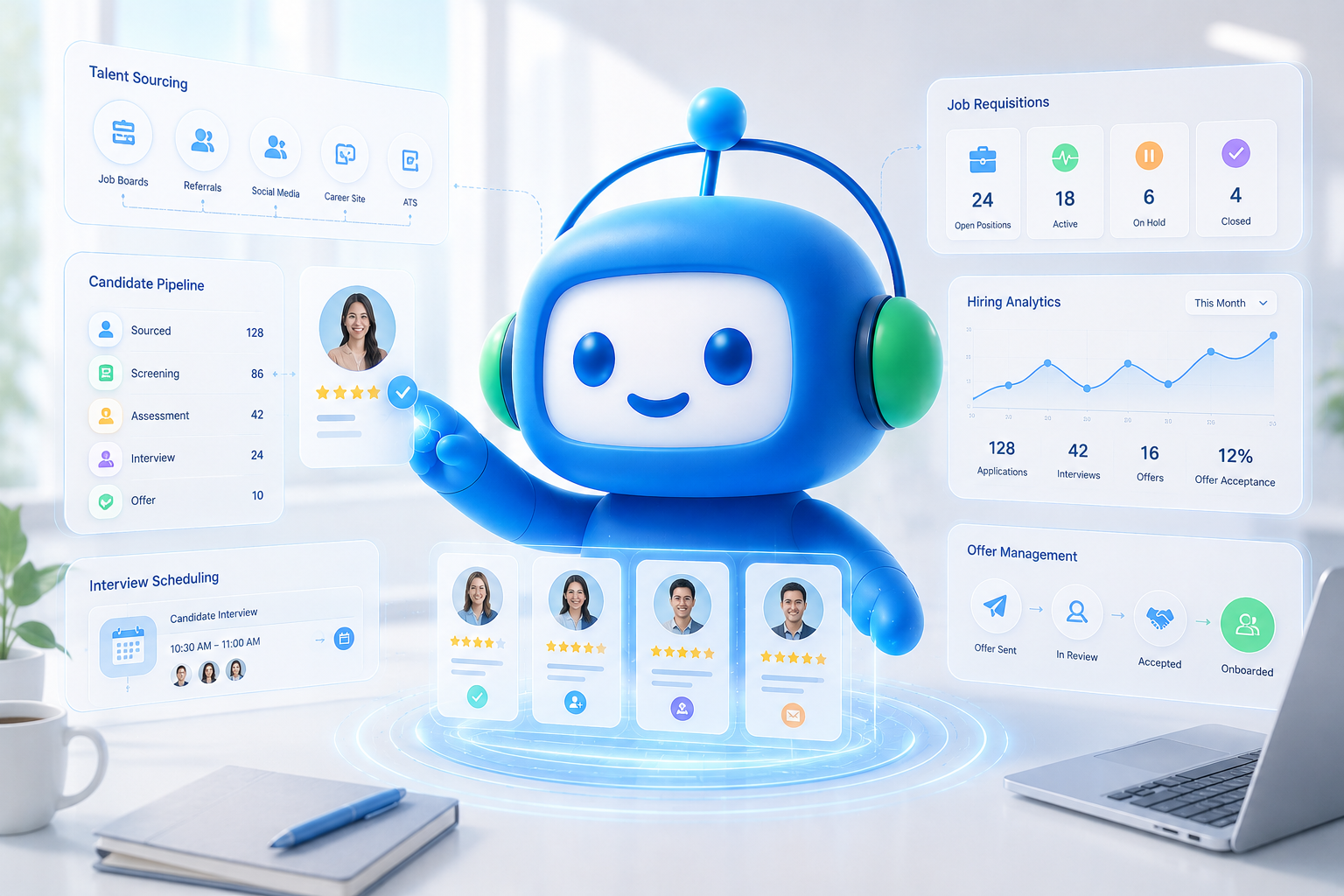
TalentRecruit’s AI agents built into the platform’s core, not bolted on as a separate module address each of these breakdowns directly.
- Sourcing that doesn’t wait for applications
Erika’s AI sourcing agent doesn’t rely on inbound applications to build a candidate pool. It actively identifies matched candidates across talent databases and sourcing channels, continuously, against the specific requirements of each open role. For logistics roles that rarely attract applications through traditional job boards, this is the difference between having candidates to screen and waiting for the pipeline to fill itself.
- AI-led screening that handles volume without losing consistency
At scale, human screening introduces variance. An AI pre-qualification agent doesn’t. It evaluates every candidate against the same criteria, at the same standard, whether it’s screening the fifth application or the five hundredth. For logistics hiring teams dealing with hundreds of applicants per role, this alone removes days from the process.
- Automated interview scheduling across locations and panels
Erika’s scheduling agent syncs with calendars, shares availability with candidates, and confirms interviews without a recruiter manually coordinating either side. For multi-location logistics operations where hiring managers are spread across warehouses and distribution centres, this removes one of the biggest sources of delay in the entire process.
- Offer and onboarding automation that closes the loop
TalentRecruit’s offer management and onboarding automation ensures that once a candidate clears the interview, the next steps happen quickly offer letters, e-signatures, and onboarding documentation all move through a streamlined, automated workflow. In logistics, where candidates make fast decisions, a fast offer process is not a nice-to-have.
- Real-time hiring analytics across the entire pipeline
TA leaders running high-volume logistics hiring need to know in real time how many roles are open, where candidates are in the process, what the conversion rates look like at each stage, and where delays are occurring. TalentRecruit’s analytics give that visibility without requiring someone to manually pull reports from three different systems.
What This Looks Like at Scale
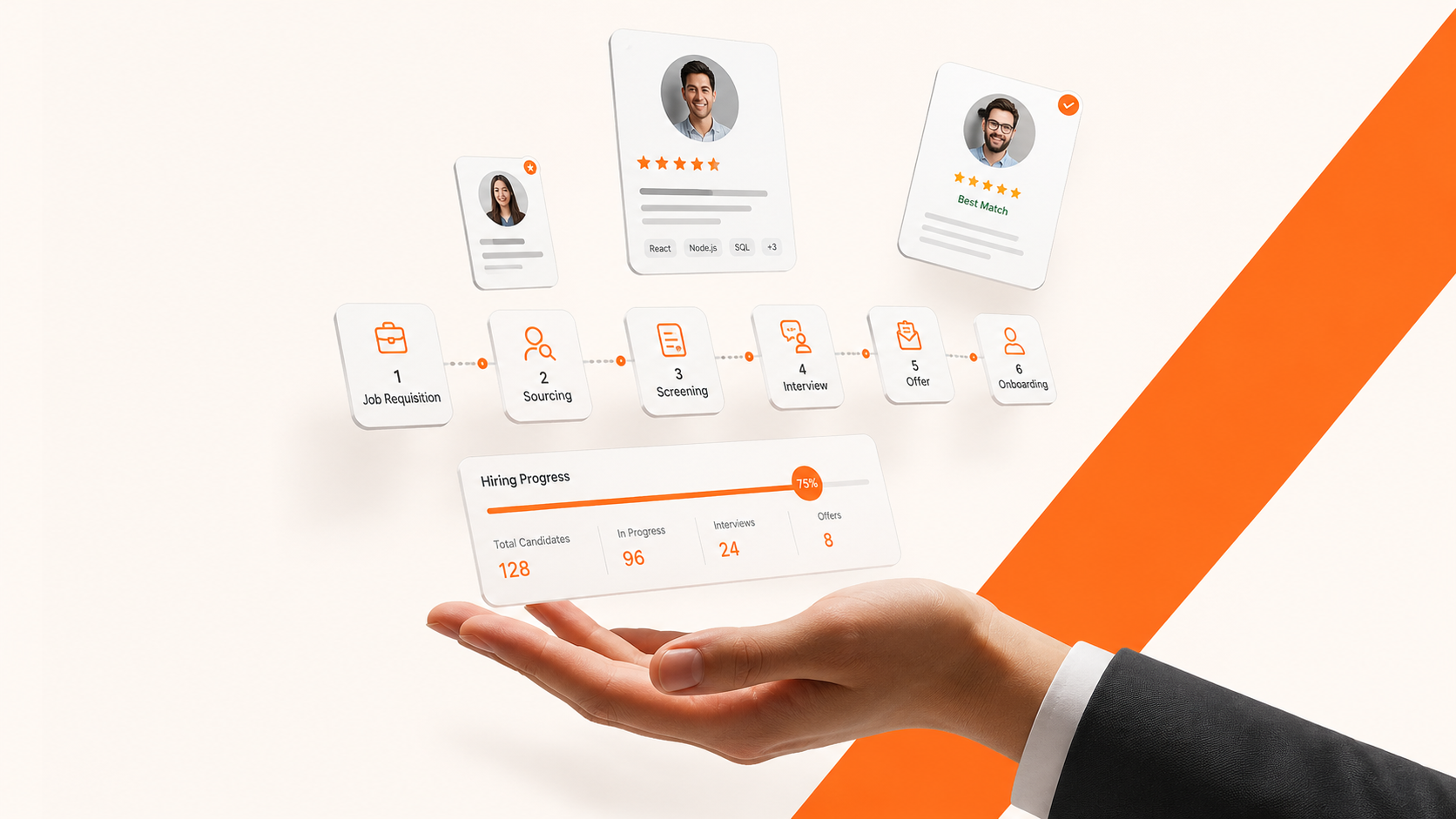
The impact of AI agents in logistics hiring isn’t incremental. When sourcing, screening, scheduling, and offer management are all running autonomously with human judgment applied at the decision points that actually require it the entire process compresses.
Time-to-hire drops not because steps are skipped, but because the time between steps stops being measured in days of waiting for someone to complete a manual task. Consistency improves because AI-led screening doesn’t vary with recruiter fatigue. Candidate experience improves because response times are faster and the process feels coordinated rather than chaotic.
For an industry where a week’s delay in filling a warehouse operations role has a direct and measurable impact on output, that compression matters.
The Real Advantage: Hiring Infrastructure That Scales With the Business
Logistics organisations that get this right aren’t just solving today’s hiring problem. They’re building hiring infrastructure that can handle the next peak season, the next contract win, the next geographic expansion without needing to proportionally scale the recruiting team to match.
That’s the promise of AI agents in logistics hiring: not just faster recruitment, but a recruitment capability that scales with the business rather than becoming the bottleneck that holds it back.
The chaos of high-volume logistics hiring doesn’t have to be managed. With the right platform, it can be handled.